
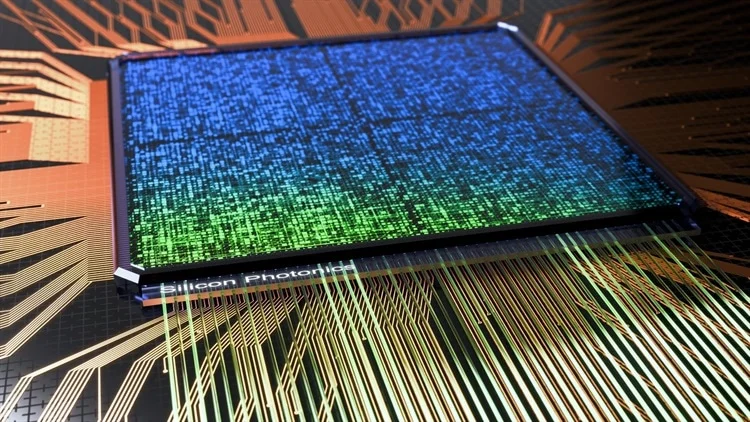
Photonics: The Science of Light Quietly Changing Our World
Light is all around. It wakes us up in the morning, carries us through the cities at night, and carries information across continents in fractions of a second. But few of us stop to think about the technology that captures and manipulates light to power modern life. That’s where photonics comes in, a field that is as complex as it is surprisingly relevant to everyday experiences.
Take a moment and think about how often you use light-based technologies in a single day. The use of photonics is present, directly or indirectly, when we unlock our smartphone with facial recognition, when we are on a video call, when we receive data from the internet through fiber optic networks or when we are examined by a medical scanner. Photonics may not get the same attention as AI or robotics, but it is one of the fundamental technologies that make possible many of the innovations people talk about today.
Understanding the Real Meaning of Photonics
At its heart, photonics is the science and technology of generating, controlling, transmitting and detecting photons, the fundamental particles of light. If electronics is about electrons, then photonics is about photons.
The field encompasses a wide range of technologies such as lasers, optical fibers, imaging systems, sensors, and advanced display technologies. What makes photonics particularly interesting is that it is able to transmit huge amounts of information very quickly, at relatively low energy consumption.
For decades engineers have used electronic systems to process and transfer information. Electronics are essential, but there are physical limits to how efficiently electrons can travel through circuits. Photons, on the other hand, can travel long distances with little signal loss, making them ideal for communications and data transfer. This simple advantage has caused some profound shifts in technology.
The Invisible Backbone of Modern-day Communication
A lot of people don’t know that photonics is needed for a lot of the internet. They are crucial for everything from worldwide email and streaming services to archiving vital data on the cloud. These networks transmit information in pulses of light via ultra-thin glass fibers. Optical communication can deliver a much higher bandwidth and faster transmission rate than conventional copper-based systems.
Photonics is increasingly important for data center and telecommunications infrastructure, due to the growing demand for digital services. Indeed, the sector’s growth path is being closely tracked by industry analysts. I came across Roots Analysis, and they said that the photonics market size is expected to grow from USD 681.60 Billion in 2024 to USD 1,390.30 Billion by 2035 at a CAGR of 6.695% during the forecast period 2024-2035. These numbers demonstrate not only how much technology has improved, but also how much modern economies rely on systems that use light.
Revolutionizing Healthcare with Precision
One of the most important applications of photonics is the healthcare sector. Medical professionals are increasingly using light-based technologies to diagnose and treat diseases with greater precision.
The best-known example is probably the laser surgery. What used to be a major surgery can now be done with astonishing precision, leading to faster recovery and fewer complications. Photonics also helps physicians detect abnormalities that would otherwise remain hidden in medical imaging technologies.
Sophisticated optical sensors enabling earlier disease detection, and emerging biophotonics techniques are enabling researchers to study biological processes at the microscopic level. In some cases, scientists can observe cellular activity as it happens, a view that was hard to imagine just a few decades ago. The result is a healthcare landscape that is becoming more precise, less invasive, and more personalized.
Light Makes Manufacturing Smarter
Walk into a modern manufacturing facility and chances are photonics is working behind the scenes. Industrial lasers are used for cutting, welding, engraving and quality control These systems are more accurate and can be produced at a faster rate. In aerospace, automotive manufacturing, semiconductor production and other industries, even microscopic defects can be serious. Optical inspection systems can detect these flaws before the product reaches the customer.
It is amazing that light can be used to measure dimensions, analyze surfaces and verify product quality without actually touching the object being inspected. That non-contact ability has become a key advantage in advanced manufacturing settings. As factories advance further along the path to automation and smart production systems, photonics is likely to become even more deeply embedded in industrial operations.
Photonics and Emerging Technologies: The Connection
Today’s most exciting technological trends have a strong photonics component. Artificial Intelligence needs enormous computer and communication resources. Many quantum technologies rely on the use of sophisticated optical devices. Autonomous vehicles use light-based sensors like LiDAR to map their surroundings and navigate safely.
Even AR and VR systems depend on sophisticated optics to create immersive experiences. Without continued advances in photonics, many of these technologies would not reach their full potential.
Researchers are also looking into photonic computing, which could help to overcome some of the limitations of traditional electronic processors. While the concept is still in the development stage, it has created a lot of excitement because photons can process and transmit information at extraordinary speeds.
Problems That Need To Be Solved
Photonics has great promise but also faces a number of challenges. The creation of advanced optical components often demands highly specialized materials and fabrication methods. Research and development costs may be high and integrating photonic systems into existing infrastructure is not always straightforward.
There is also a growing need for competent professionals who understand both optical science and engineering applications. As demand rises, educational institutions and industry leaders are working to address talent shortages. Scaling up is another challenge. It takes years of refinement, testing and investment to get breakthroughs out of research labs and into commercial products. Yet such hurdles are not unusual for transformative technologies. If history is any guide, continued innovation generally results in lower costs and increased accessibility over time.
Outlook: A Future Powered by Light
Photonics are uniquely situated in the technology landscape. It is both a mature field with decades of proven applications and an emerging field with tremendous, untapped potential. It’s the versatility of photonics that makes it so compelling. It drives progress in communication, healthcare, manufacturing, transportation, security, energy systems and scientific research. Few technologies have such a wide reach across industries.
Its impact is often ignored, which makes photonics maybe the most interesting. People see the faster internet, better medical treatments, smarter devices but seldom the light-based technologies that make those advances possible.
Photonics will become even more important as our society becomes more connected and data driven. Artificial intelligence, quantum computing, advanced automation may shape the future, but behind many of those breakthroughs will likely be one constant force quietly illuminating the path forward: the science of light itself.