Peptic Ulcer Symptoms – Stomach Pain Patterns To Track
Peptic ulcer symptoms can include dull or burning upper-abdominal pain, early fullness, nausea, bloating, and frequent belching. Pain may appear when the stomach is empty, during the night, or after eating. Yet some ulcers cause no obvious symptoms until bleeding or another complication develops.
What Does Peptic Ulcer Pain Usually Feel Like?
Ulcer pain is commonly felt between the breastbone and belly button. It may be described as burning, aching, gnawing, or persistent discomfort. The pain can come and go for days or weeks rather than remaining constant.
Food doesn’t affect everyone in the same way. For some people, eating temporarily reduces discomfort. For others, a meal makes the pain worse. This difference is one reason symptom timing is more useful than assuming every ulcer follows the same pattern.
| Pattern | What You May Notice | What to Record |
| Empty-stomach pain | Burning between meals | Time since last meal |
| Night pain | Discomfort interrupts sleep | Time and duration |
| Post-meal pain | Symptoms worsen after eating | Portion and food type |
| Early fullness | Unable to finish a normal meal | Amount eaten |
What Other Peptic Ulcer Symptoms Can Appear?
Besides abdominal pain, an ulcer may cause nausea, bloating, belching, reduced appetite, or feeling full after eating a small amount. These symptoms overlap with gastritis, indigestion, reflux, gallbladder problems, and several other digestive conditions.
Keep a structured symptom notebook that shows the full pattern rather than focusing only on pain. Record appetite changes, nausea, bowel color, medicines, and whether symptoms wake you.
And don’t dismiss an ulcer simply because the discomfort is mild. NIDDK notes that many people have no symptoms until complications occur.
Why Do Ulcer Symptoms Develop?
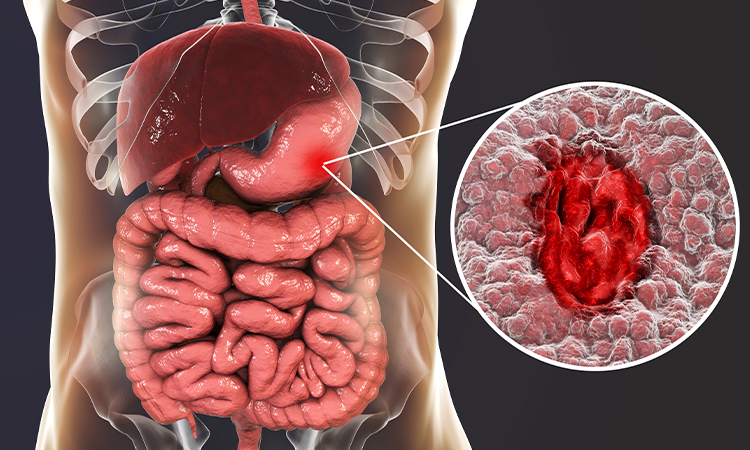
Peptic ulcers are open sores in the lining of the stomach or duodenum, the first part of the small intestine. Two common causes are infection with Helicobacter pylori, known as H. pylori, and the use of nonsteroidal anti-inflammatory drugs such as ibuprofen, naproxen, and aspirin.
Your meal-and-pain timeline should include all medicines and supplements you take. Don’t stop prescribed aspirin or another medication on your own, especially when it was recommended for heart or stroke protection.
Spicy food and stress may aggravate discomfort in some people, but they aren’t the main causes of most peptic ulcers. Treating only the menu while ignoring H. pylori or regular NSAID use can allow the underlying problem to continue.
How Are Peptic Ulcers Checked?
Symptoms alone can’t confirm an ulcer. Doctors may review medication use, perform a physical examination, test for H. pylori, and use an upper gastrointestinal endoscopy when needed. Testing also helps identify complications and conditions with similar symptoms.
Prepare a treatment question list before the appointment. Include when the pain began, whether meals change it, which pain relievers you use, and whether you’ve noticed black stool or vomiting.
Treatment generally aims to heal the ulcer and address its cause. Depending on the findings, that may include acid-reducing medicine, treatment for H. pylori, or changes to medicines that irritate the digestive lining.
Common Mistakes That Delay Proper Care
A frequent mistake is taking more pain reliever when stomach pain increases. Some NSAIDs can cause or worsen ulcers, so repeated use may deepen the problem.
Another error is assuming temporary relief proves the ulcer is healing. Pain can improve while the sore remains present. Conversely, ulcer symptoms can disappear and return later.
Home remedies may also interfere with medicines or create false reassurance. The safest move is to identify the cause rather than rotating through antacids, supplements, and restrictive diets without medical guidance.
Red Flags: When to Seek Help
Get urgent medical help for vomit containing red blood or material resembling coffee grounds, black or tarry stool, fainting, dizziness, rapid weakness, or sudden severe abdominal pain. Gastrointestinal bleeding and perforation can become life-threatening.
Peptic ulcer complications may include bleeding, a hole in the stomach or duodenal wall, penetration into a nearby organ, or blockage that prevents food from moving normally. Persistent vomiting, worsening pain, unexplained weight loss, and increasing abdominal swelling also warrant prompt evaluation.
Frequently Asked Questions
Does ulcer pain always improve after eating?
No. Food may briefly relieve empty-stomach pain in some people, while it makes symptoms worse in others. Record your individual response instead of using meal-related relief as a self-diagnosis.
Can I have a peptic ulcer without stomach pain?
Yes. Some ulcers remain silent until they bleed or cause another complication. Unexplained anemia, black stool, vomiting blood, or sudden weakness requires medical assessment even without previous pain.
Will an ulcer heal if I avoid spicy food?
Avoiding a personal trigger may reduce discomfort, but it won’t necessarily treat the cause. Ulcers linked to H. pylori or NSAIDs usually require a cause-focused medical plan.
Turn the Pattern Into Useful Evidence
For the next week, record pain location, meal timing, medication use, nausea, appetite, and stool changes. Don’t wait for severe pain if the pattern keeps returning. A focused medical evaluation can identify the cause and reduce the chance of bleeding or another complication.
This article is for general education and does not replace examination, testing, or treatment by a qualified clinician.