Cushing’s Syndrome Symptoms: Weight Gain, Moon Face, and Skin Changes
Cushing’s syndrome symptoms can include weight gain around the abdomen and upper body, a rounded face, thinner arms and legs, easy bruising, purple stretch marks, and muscle weakness. These changes result from prolonged exposure to excess cortisol. Appearance changes alone aren’t enough for diagnosis, but a growing cluster deserves medical evaluation.
What Does Cushing’s Syndrome Usually Look Like?
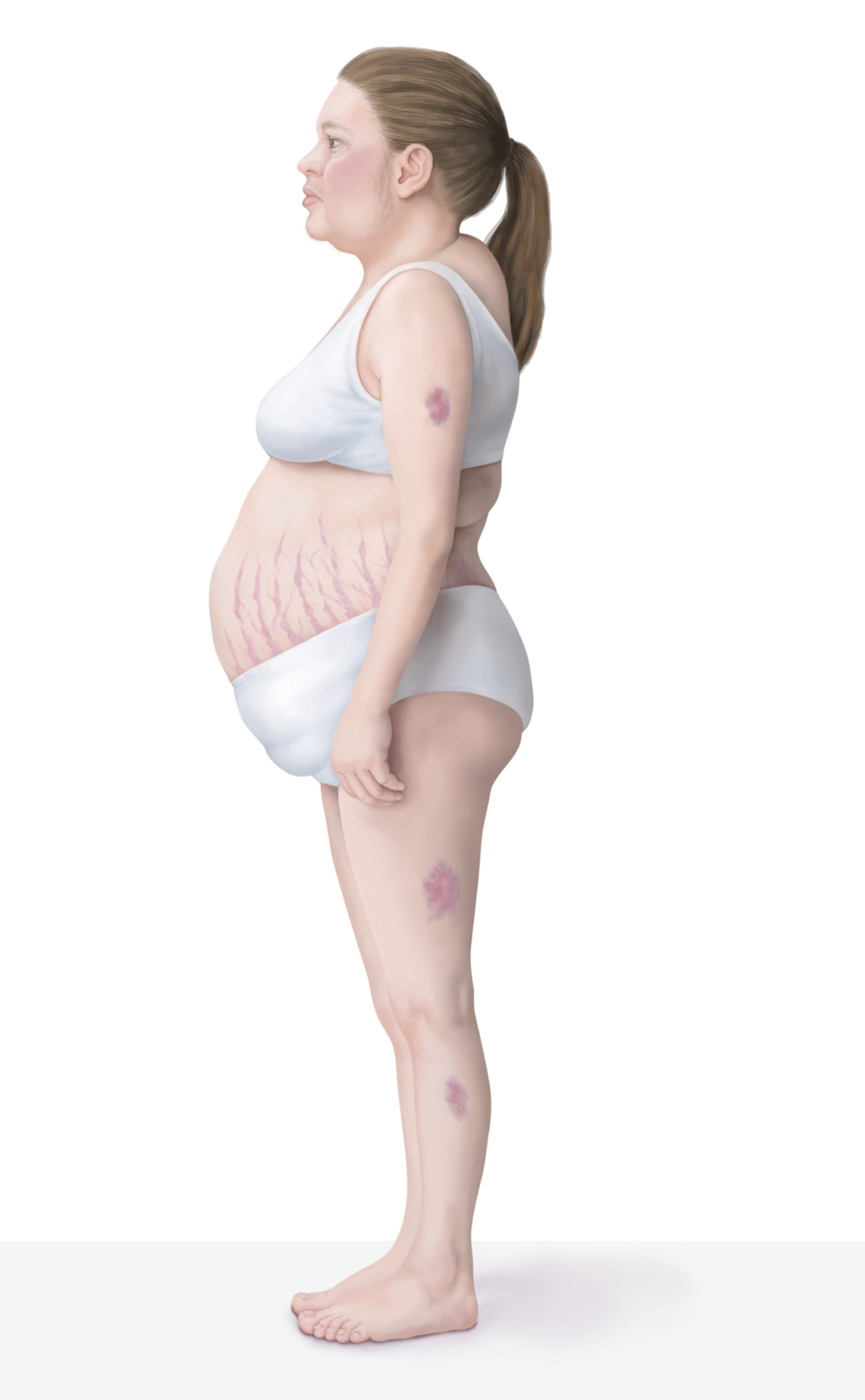
A rounded or fuller face—often called “moon face”—may develop alongside increased fat around the abdomen, neck, or upper back. At the same time, the arms and legs can appear comparatively thin because excess cortisol contributes to muscle and tissue changes.
Other possible signs include wide purple or reddish stretch marks, fragile skin, slow wound healing, easy bruising, acne, and weakness when climbing stairs or rising from a chair. The NIDDK overview of Cushing’s syndrome identifies central weight gain, a round face, thin limbs, bruising, purple stretch marks, and weak muscles among its characteristic findings.
Photographs and a daily health timeline may help show gradual changes that aren’t obvious from one day to the next.
Why Does Weight Gain Happen in Certain Areas?
Excess cortisol can change how the body distributes fat and handles proteins, glucose, blood pressure, and immune responses. The resulting pattern is often more specific than ordinary weight gain: greater fullness through the trunk with thinner limbs and reduced muscle strength.
Still, not everyone develops every classic feature. Symptoms depend on the cortisol level, how long it has remained high, age, sex, medications, and other health conditions. Children may gain weight while growing more slowly than expected.
Tracking clothing fit, strength, bruising, and other physical change patterns gives a clinician more context than reporting weight alone.
Which Symptoms Often Appear Together?
Cushing’s syndrome can affect the skin, muscles, bones, mood, metabolism, and reproductive system.
| Symptom group | Possible changes | Useful distinction |
| Body shape | Trunk weight gain, rounder face, upper-back fullness | Arms and legs may remain thin |
| Skin | Easy bruising, wide purple stretch marks, slow healing | Marks may be wider and darker than common stretch marks |
| Strength | Weak thighs or shoulders | Everyday movements may become harder |
| Wider effects | High blood pressure, glucose changes, mood or menstrual changes | Often requires laboratory assessment |
One symptom isn’t decisive. A rounded face can have several causes, and common stretch marks don’t automatically indicate a cortisol disorder.
What Causes Excess Cortisol?
Cushing’s syndrome may result from taking glucocorticoid medicines for a prolonged period or from the body producing too much cortisol. Internal causes can involve the pituitary gland, adrenal glands, or hormone-producing tumors elsewhere in the body.
Tell the clinician about pills, injections, inhalers, creams, and joint treatments containing steroids. Even products applied to the skin or inhaled for breathing conditions can matter when reviewing total exposure.
A written medicine inventory combined with general health information habits can prevent accidental omissions during the appointment. Do not stop prescribed steroids suddenly unless the prescribing clinician gives you a safe reduction plan.
How Do Doctors Check for Cushing’s Syndrome?
Evaluation begins with the symptom pattern and medication history. Because cortisol naturally changes during the day, a single random measurement may not settle the question.
Clinicians may use urine, saliva, or blood-based cortisol tests, sometimes with medication designed to test how the hormone system responds. Abnormal screening results usually require confirmation and further testing to identify the source. Imaging is generally used after biochemical evidence points toward excess cortisol, not as a substitute for hormone testing.
Mistakes That Delay Recognition
The common assumption is that every change comes from diet, aging, or reduced exercise. That explanation becomes less convincing when weight gain appears with thin limbs, marked muscle weakness, easy bruising, wide purple stretch marks, and a changing face.
Another mistake is focusing only on cosmetic appearance. Excess cortisol can affect blood pressure, blood sugar, bone strength, infections, mood, and blood-clot risk. On the other hand, aggressively pursuing Cushing’s testing for isolated weight gain can lead to unnecessary worry. The full clinical pattern should guide the decision.
Red Flags: When to Seek Immediate Care
Seek emergency care for chest pain, sudden shortness of breath, fainting, severe confusion, one-sided leg swelling with pain, or signs of a serious infection. These symptoms don’t prove Cushing’s syndrome, but they may indicate dangerous complications requiring urgent assessment.
Contact the prescribing clinician promptly if steroid medicine has been stopped suddenly and severe weakness, vomiting, dizziness, or collapse develops. Never restart or change the dose without professional instructions.
Frequently Asked Questions
Is moon face always caused by Cushing’s syndrome?
No. Facial fullness can result from medication, weight gain, fluid retention, or other conditions. Cushing’s becomes more plausible when facial change occurs with several characteristic skin, muscle, and body-shape findings.
Can steroid medication cause Cushing’s symptoms?
Yes. Prolonged exposure to glucocorticoid medicines is a recognized cause. The risk depends on the medicine, route, dose, duration, and individual response.
Will dieting remove Cushing’s weight gain?
Diet changes may support general health but won’t correct an underlying cortisol disorder. Treating the source of excess cortisol requires medical assessment and a condition-specific plan.
Ask for a Hormone-Focused Assessment
A changing face or waistline isn’t diagnostic by itself. But central weight gain combined with thin limbs, muscle weakness, bruising, and purple stretch marks should prompt a medication review and medical assessment. Bring photographs, a complete steroid history, and a clear timeline so the clinician can choose suitable cortisol tests.
This information is educational and does not replace diagnosis or treatment from a qualified healthcare professional.