Simple Mobility Exercises for Flexible Aging Bodies
Aging does not make your body fragile overnight; sitting still does most of the damage first. The right mobility exercises help older adults keep bending, reaching, turning, standing, and walking with less stiffness in daily life. For many Americans, the problem is not a lack of effort. It is that movement gets squeezed between work, family care, errands, screen time, and long drives.
A good routine should feel useful before it feels impressive. It should help you step into the shower without bracing, get out of a car without twisting hard, and pick something up from the floor without holding your breath. Resources like healthy everyday living guidance can support that bigger goal, but the real change starts in small, repeatable moves you can do at home.
The CDC recommends older adults aim for weekly aerobic activity, strength work, and balance-focused movement, while the National Institute on Aging notes that flexibility work can help maintain easier movement. That does not mean your routine needs to look like a gym class. It means your joints need regular, low-pressure reminders that they are still allowed to move.
Why Simple Mobility Exercises Matter More as the Years Add Up
Stiffness rarely arrives with drama. It usually shows up as tiny negotiations: turning your whole body instead of your neck, avoiding low cabinets, skipping the floor, or choosing one chair because it is easier to leave. Those small adjustments feel harmless until they shrink your world.
Gentle Stretching for Seniors Should Start With Real Life
Gentle stretching for seniors works best when it copies the movements people already need. Reaching overhead matters because plates, closets, and shelves exist. Turning through the upper back matters because backing out of a driveway still asks your spine to rotate.
A woman in her late 60s in Ohio may not care about touching her toes, but she cares about tying shoes without sitting down for five minutes afterward. That is the better standard. Mobility should serve the life you are living, not a fitness photo you never wanted.
The counterintuitive truth is that easier movements often create better progress than dramatic ones. A slow shoulder circle done every morning may help more than one hard weekend stretch that leaves you sore and annoyed. Consistency beats intensity because joints learn through repetition.
Joint Mobility Exercises Work Best Before Pain Takes Over
Joint mobility exercises are not only for people who already feel stuck. They are better used before stiffness becomes the boss of your day. Ankles, hips, shoulders, wrists, and the upper back all need regular motion because they influence how safely you walk, stand, reach, and balance.
Think about a grocery store parking lot in winter. A stiff ankle can shorten your step. A tight hip can make you shuffle. A locked upper back can slow your reaction when you turn toward a sound or a moving cart. Mobility is not decoration; it is part of staying steady.
Many people wait for pain before they start moving. That is backwards. The smarter move is to keep motion available while your body still trusts it, especially if you spend long stretches sitting at a desk, in a recliner, or behind the wheel.
Building a Daily Flexibility Routine That Does Not Feel Like Work
A routine fails when it asks too much too soon. Older adults do not need another complicated plan sitting untouched on the kitchen counter. They need a pattern that fits between coffee, laundry, TV, prayer, phone calls, and the thousand ordinary moments that shape a day.
A Daily Flexibility Routine Needs Clear Anchors
A daily flexibility routine becomes easier when it attaches to something you already do. After brushing your teeth, roll your shoulders. Before lunch, move your ankles. During a TV commercial, practice standing tall and turning gently through your upper back.
This matters because motivation is unreliable. Habits are steadier. A retired man in Arizona may forget a 30-minute plan, but he may remember five slow sit-to-stands before the evening news because the cue is already there.
Start with five minutes. That sounds almost too small, which is the point. A routine that feels easy enough to repeat will usually outlast a perfect plan that requires special clothes, a quiet room, and a burst of discipline.
Aging Body Movement Should Respect Energy, Not Fight It
Aging body movement should work with the body’s daily rhythm. Some people feel looser in the afternoon. Others move best in the morning before stiffness settles in. The best time is not the one a fitness expert prefers; it is the one you can repeat without resentment.
Energy also changes with sleep, weather, medication schedules, arthritis flares, and stress. A smart routine leaves room for that. On a good day, you may move through the full set. On a rough day, neck turns, ankle circles, and gentle breathing may be enough.
That is not failure. It is maturity. The body responds better to steady invitations than forceful demands, especially when joints already feel guarded.
The Best Moves for Hips, Shoulders, Ankles, and Spine
Your body does not move as separate parts during real life. A stiff ankle changes your walk. Tight hips tug at your back. Locked shoulders make reaching feel risky. A useful routine connects the pieces without turning movement into a medical project.
Gentle Stretching for Seniors Can Begin From a Chair
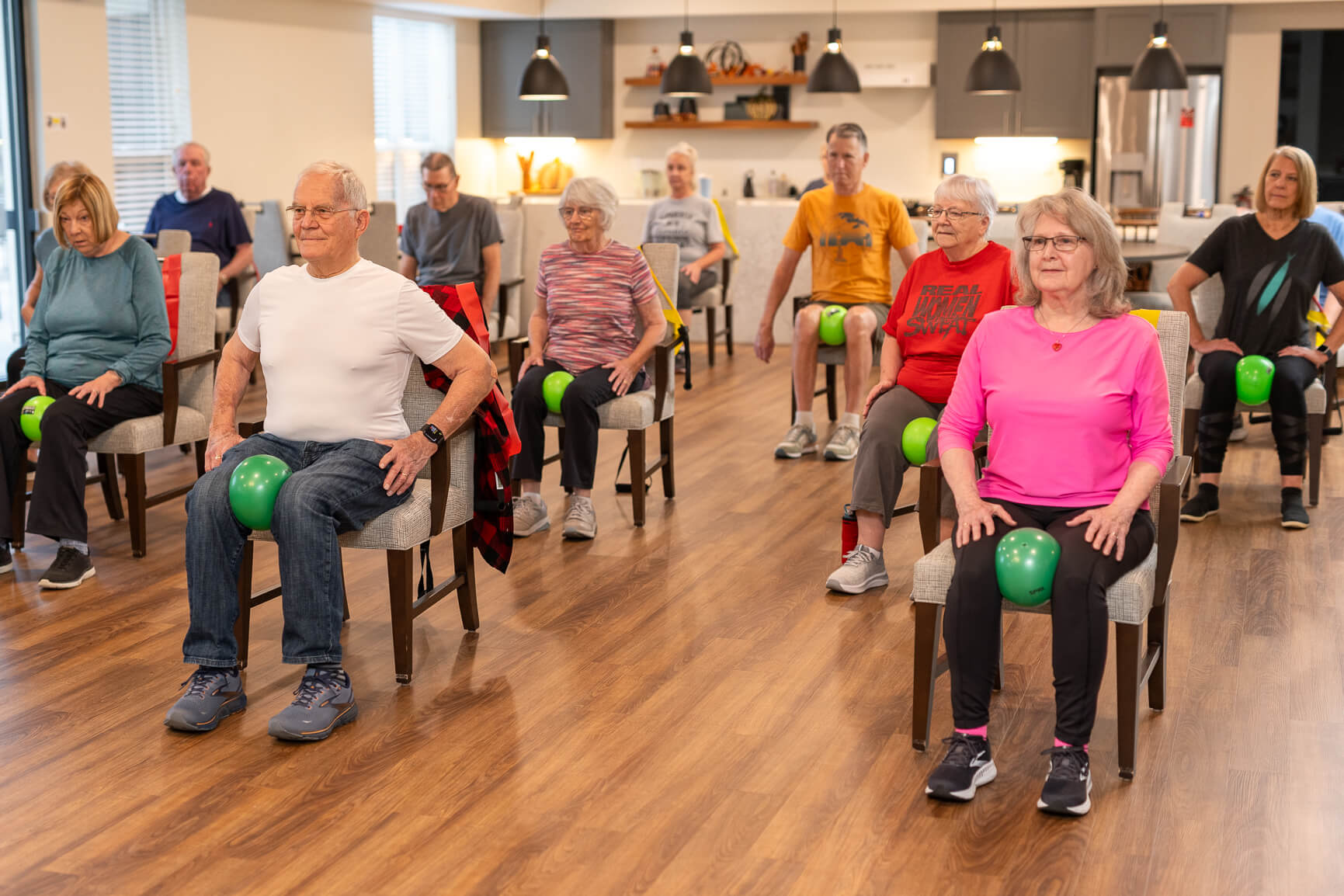
A chair gives support without making the routine feel clinical. Sit tall, place both feet on the floor, and slowly turn your head to the right and left. Add shoulder rolls, wrist circles, ankle circles, and gentle seated marches.
This setup works well in small apartments, senior living rooms, and regular American kitchens where space is limited. You do not need a mat. You do not need equipment. You need a stable chair and enough room to move without bumping into a table.
Chair work also lowers fear. Many older adults avoid exercise because they worry about balance. Starting seated lets the nervous system relax, and relaxed movement often reaches farther than guarded movement.
Joint Mobility Exercises Should Include the Ankles and Hips
The ankles and hips deserve more attention than they get. Ankle circles, heel raises near a counter, gentle hip circles, and supported side steps can all help maintain the motion needed for walking, stairs, and standing from a chair.
A practical sequence might look like this: hold the kitchen counter, rise onto your toes slowly, lower with control, then shift weight from one foot to the other. After that, make small hip circles as though drawing a coin-sized circle with your pelvis. Keep it slow.
The unexpected part is how much upper-body ease can improve when the lower body moves better. When hips and ankles do their share, the back often stops working overtime. The whole body feels less like a stack of tight parts.
Simple Mobility Exercises for Safer Daily Independence
Independence is not only about doing big things alone. It is about small freedoms that protect dignity: carrying laundry, stepping over a curb, reaching the back seat, getting up from the floor, or walking through a crowded store without feeling rushed.
Daily Flexibility Routine Choices Should Match Your Home
Your home can either support movement or quietly block it. A cluttered hallway makes balance practice risky. A low, soft sofa makes standing harder. A slippery rug can turn a simple stretch into a bad idea.
Set up your space first. Use a sturdy chair, clear the floor, wear shoes or grippy socks, and keep a counter nearby for standing moves. The safest routine is the one that respects the room you are actually in.
This is where many people miss the point. They search for the “best” exercise while ignoring the environment. A decent move done safely in a clear kitchen beats a perfect move done beside a loose rug every time.
Aging Body Movement Gets Better When Strength Joins In
Aging body movement needs more than stretching. Strength gives mobility somewhere to go. The CDC notes that older adults should include muscle-strengthening activities, and national guidelines also encourage balance and multicomponent activity for older adults.
That can be simple. Sit-to-stands from a chair, wall pushups, light resistance bands, and slow step-ups can support the same daily movements that flexibility work protects. Stronger legs make hip mobility more useful. Stronger shoulders make reaching less stressful.
The best routine is not fancy. It is honest. It helps you move through Tuesday with more control than you had on Monday, and that is a serious win.
Conclusion
The body does not ask for perfection as it ages. It asks for regular proof that movement is still safe, useful, and worth keeping. That proof can be small: a few ankle circles near the bed, slow shoulder rolls at the sink, supported hip circles at the counter, or a careful sit-to-stand before dinner.
The smartest approach to mobility exercises is to stop treating them like a separate fitness chore. Fold them into the life you already have. Let your home, schedule, and energy guide the shape of the routine, then keep it steady enough that your joints begin to trust you again.
Stiffness grows in silence, but so does progress. Choose three movements today, do them with control, and repeat them tomorrow. Your future body will not care how impressive the routine looked; it will care that you kept showing up.
Frequently Asked Questions
What are the best mobility exercises for older adults at home?
Chair marches, shoulder rolls, ankle circles, neck turns, heel raises, hip circles, and sit-to-stands are strong starting points. They train useful motion without needing equipment. Use a stable chair or counter for support, especially when standing balance feels uncertain.
How often should seniors do mobility exercises for flexibility?
Most older adults do well with short daily sessions or at least several times per week. Five to ten minutes can be enough at first. The goal is steady movement, not soreness. Regular practice helps joints stay familiar with normal ranges of motion.
Are mobility exercises safe for people with arthritis?
Many gentle movements can help stiffness, but pain should guide the pace. Use slow motion, avoid bouncing, and stop if sharp pain appears. People with arthritis should ask a healthcare professional for personal guidance when swelling, recent injury, or severe pain is present.
Can stretching improve balance in aging adults?
Stretching alone does not replace balance training, but it can support easier movement. Looser ankles, hips, and shoulders may help posture and walking control. For better balance, combine flexibility work with supported weight shifts, heel raises, and strength exercises.
What is the easiest daily flexibility routine for beginners?
Start seated with neck turns, shoulder circles, wrist circles, ankle circles, and gentle knee lifts. Then stand near a counter for heel raises and small hip circles. Keep the whole routine under ten minutes so it feels easy to repeat.
Should older adults stretch before or after walking?
A light warm-up before walking is helpful, such as ankle circles, easy marching, and shoulder rolls. Longer holds often feel better after the body is warm. Avoid forcing cold muscles into deep stretches, especially early in the morning.
How can seniors improve hip mobility without floor exercises?
Standing hip circles, supported side steps, seated knee lifts, and gentle sit-to-stands can all help. Floor work is not required. A kitchen counter, sturdy chair, or hallway wall can provide enough support for safe hip movement.
When should someone stop a mobility exercise?
Stop when you feel sharp pain, dizziness, chest discomfort, sudden weakness, or unusual shortness of breath. Mild stretching tension is different from pain. When a movement feels wrong, choose a smaller range or ask a qualified clinician for guidance.