Shingles Symptoms: Painful Rash, Tingling, and Nerve Burning
Shingles symptoms commonly begin with burning, tingling, itching, or unusual skin sensitivity on one side of the body. A painful cluster of blisters may follow several days later. Because treatment decisions can be time-sensitive, a suspected shingles rash should be discussed with a healthcare provider promptly rather than watched for a week.
What Are the First Signs of Shingles?
Pain can appear before anything is visible. People may describe stabbing, electric, deep aching, pins and needles, or a sunburn-like feeling. Headache, tiredness, chills, or sensitivity to light can also occur before the rash.
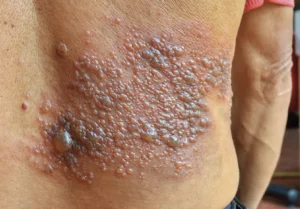
The CDC’s shingles symptom guidance explains that the rash usually develops on one side of the face or body. It consists of fluid-filled blisters that generally scab within 7 to 10 days and clear over roughly 2 to 4 weeks.
A classic clue is the combination of pain and a one-sided rash. But symptoms may be less typical in older adults, people with weakened immunity, or anyone whose rash affects several areas.
What Does the Shingles Rash Look Like?
Shingles usually follows a strip of skin supplied by a particular nerve, known as a dermatome. The rash may wrap from the spine toward the chest or abdomen. It can also appear on the neck, scalp, face, arm, or leg.
| Stage | Common appearance | Common sensation |
| Before rash | Skin may look normal | Burning, tingling, pain |
| Early rash | Red or discolored spots | Tenderness or itching |
| Blister stage | Grouped fluid-filled blisters | Sharp or throbbing pain |
| Healing stage | Crusts and scabs | Itching or lingering sensitivity |
Loose clothing and comfort-focused home habits may reduce friction, but they don’t treat the viral infection. Avoid breaking or scratching blisters because damaged skin can become infected.
Why Does Shingles Cause Nerve Burning?
Shingles results from reactivation of the varicella-zoster virus, which remains in nerve tissue after chickenpox. When it reactivates, inflammation develops along the affected nerve and produces pain in the skin region that nerve supplies.
The discomfort can seem out of proportion to the rash. Even fabric touching the skin may hurt. Keeping a brief record of pain intensity, rash location, and sleep disruption can support clearer conversations with a clinician; consistent pain tracking habits are more useful than relying on memory alone.
Pain that continues after the rash heals is called postherpetic neuralgia. It’s the most common long-term complication, and its likelihood rises with age.
Where Can Shingles Become Dangerous?
A rash near the eye, forehead, nose, or eyelid requires urgent medical assessment because eye involvement can threaten vision. Symptoms involving an ear may occur with facial weakness, dizziness, hearing changes, or severe ear pain.
Shingles can also become widespread in people with weakened immune systems. A rash crossing several body regions, fever with marked illness, confusion, breathing difficulty, or neurological symptoms needs prompt care.
One mistake is waiting for “perfect” blisters before calling a clinician. Another is assuming that pain without a rash can’t be shingles. Clear recovery planning matters, but only a healthcare professional can determine whether the pattern fits shingles or another condition.
Can Someone With Shingles Infect Other People?
A person with shingles doesn’t give another person shingles directly. However, fluid from active blisters can transmit varicella-zoster virus to someone without immunity, causing chickenpox rather than shingles.
Cover the rash when possible, wash hands regularly, and avoid direct contact with people at higher risk until lesions have crusted. This includes pregnant people without known immunity, newborns, and individuals with significantly weakened immune systems.
The rash shouldn’t be covered with a tight, sticky dressing unless a clinician recommends it. Gentle protection is usually more comfortable than pressure against sensitive skin.
Red Flags and When to Get Help
Contact a healthcare provider promptly when shingles is suspected, especially if symptoms began recently. Seek urgent care for a rash near the eye or ear, facial weakness, vision or hearing changes, confusion, severe headache, stiff neck, difficulty breathing, widespread blisters, high fever, or rapidly worsening pain. People who are pregnant, immunocompromised, or medically fragile should request guidance without delay after suspected exposure or symptoms.
Frequently Asked Questions
Can shingles cause pain without a visible rash?
Yes. Pain, itching, or tingling can begin several days before blisters. Rarely, nerve symptoms may occur without an obvious rash, making professional evaluation particularly important.
Does shingles always cross the chest or back?
No. The trunk is common, but shingles can affect the face, scalp, neck, arms, or legs. It usually stays on one side and doesn’t cross the body’s midline.
How long can shingles nerve pain last?
The acute pain may improve as the rash heals, but some people develop persistent nerve pain lasting months or longer. Earlier medical evaluation may improve treatment options.
Act Before the Rash Has Time to Worsen
Take a clear photograph, avoid touching the blisters, and call a healthcare provider when one-sided burning pain appears with a new rash. Don’t wait for every blister to form. Prompt evaluation matters most when the face, eye, ear, or a weakened immune system is involved.
This information is educational and isn’t a substitute for diagnosis or personalized medical care.