Ringworm Symptoms: Circular Rash and Spreading Patterns
Ringworm symptoms usually begin as an itchy, scaly patch that expands outward and may develop a raised circular border. The center can become clearer while the edge remains active. Despite its name, ringworm isn’t caused by a worm. It’s a fungal infection that can affect skin, hair, feet, groin, or nails.
How Can You Recognize a Ringworm Rash?
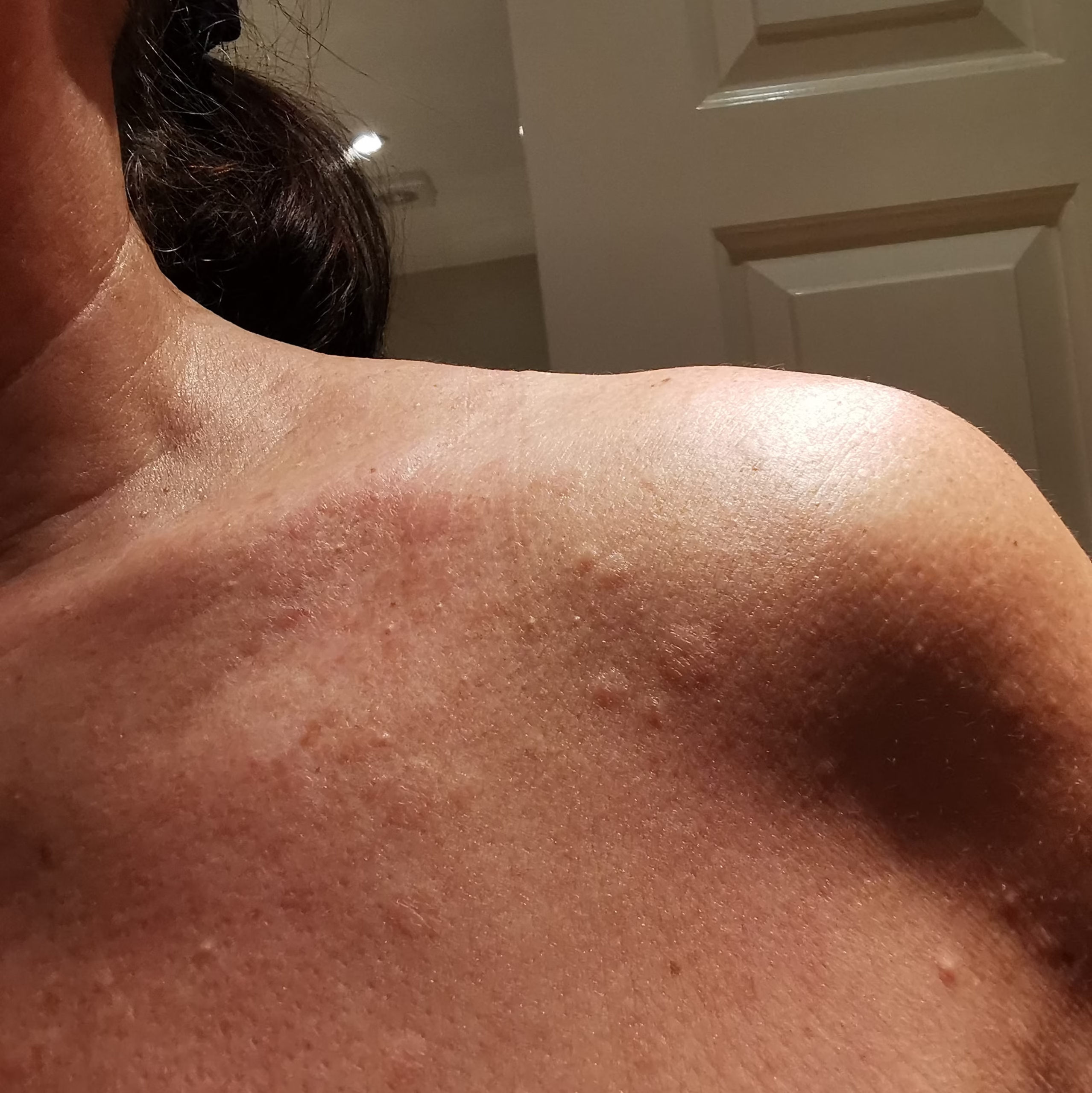
Classic ringworm on the body often forms a round or oval patch with a scaly, slightly raised edge. Some rashes create overlapping rings, while others never develop a perfect circle. On darker skin, the affected area may look brown, gray, purple, or darker than nearby skin instead of bright red.
The rash may itch, sting, or feel dry. Its outer border often expands while the center appears less inflamed. The CDC’s ringworm symptom guide notes that skin infections can be itchy, raised, scaly, and ring-shaped, with appearances varying by skin tone.
| Body area | Possible symptom | Medical term |
| Arms or trunk | Circular, scaly rash | Tinea corporis |
| Scalp | Scaling or hair loss | Tinea capitis |
| Feet | Peeling and itching | Tinea pedis |
| Nails | Thick, cracked, discolored nail | Onychomycosis |
Why Does Ringworm Spread Outward?
The fungus grows through keratin-rich tissues in the outer skin. This often makes the edge appear more active than the center. Scratching can irritate the rash and may move fungal material to another body area.
Shared towels, clothing, sports equipment, grooming tools, and close skin contact can contribute to transmission. Pets can also carry certain fungi. Reviewing everyday skin care choices can help you identify shared items or routines that may be allowing repeated exposure.
One expanding ring isn’t automatic proof of ringworm. Eczema, psoriasis, granuloma annulare, and other rashes can imitate circular patterns, so unusual or persistent lesions deserve evaluation.
Is Ringworm Contagious?
Yes, many forms can spread between people, from animals to people, or through contaminated objects and surfaces. Risk rises in warm, damp settings such as locker rooms, shared showers, wrestling mats, and crowded living spaces.
Don’t share towels, hats, brushes, clothing, or bedding while an infection is suspected. Clean and dry personal items according to their care instructions. Small changes in common lifestyle patterns may reduce repeated exposure, particularly when several family members or teammates have itchy patches.
The fungi linked with body ringworm can also cause athlete’s foot, jock itch, and some nail infections.
How Is Ringworm Usually Treated?
Many limited skin infections are treated with a nonprescription antifungal cream, lotion, or powder. Follow the product label and use it for the full directed period. A rash that looks better after a few days may still require continued treatment.
Scalp ringworm, extensive infection, nail involvement, or infection that doesn’t respond may require prescription medicine. Treatment choices can affect household budgeting habits, but selecting the cheapest unidentified rash cream can backfire if it contains the wrong ingredients.
The CDC warns that corticosteroid creams can make ringworm worse and alter its appearance, making later diagnosis harder. Combination products shouldn’t be used unless a clinician specifically recommends them for the confirmed condition.
Where Ringworm Treatment Goes Wrong
People often stop antifungal treatment when itching fades, even though the fungus hasn’t been fully controlled. Another mistake is covering every circular rash with steroid cream. Steroids may temporarily reduce redness while allowing fungal growth to spread.
Don’t scrape, bleach, burn, or disinfect the skin with harsh household products. Those methods can damage the protective skin barrier. You should also avoid treating a pet with human medication; a veterinarian should assess suspicious bald or scaly patches in an animal.
Red Flags: When to Get Medical Help
Arrange medical care for a rash on the scalp, widespread lesions, significant swelling, pus, pain, fever, or signs of bacterial infection. Seek advice when the face, beard area, nails, or groin are involved, since these locations may require different treatment.
A clinician should also examine ring-shaped rashes that continue spreading after correctly used antifungal medicine. People with diabetes, poor circulation, or weakened immune systems shouldn’t delay care. Painful, deeply inflamed, or unusually severe lesions need assessment rather than repeated home experiments.
Frequently Asked Questions
Does every ringworm rash have a clear center?
No. Some infections have obvious central clearing, while others remain uniformly scaly or inflamed. Appearance can also change after steroid use.
Can ringworm spread through laundry?
Shared clothing, bedding, and towels may carry fungal material. Wash contaminated items according to fabric instructions and avoid sharing them during treatment.
Is ringworm the same as eczema?
No. Ringworm is a fungal infection, while eczema is an inflammatory skin condition. Because their appearances can overlap, uncertain rashes should be examined.
Stop the Expansion Early
An itchy patch that enlarges from the outside deserves attention before it reaches other body areas or household members. Use an appropriate antifungal only when ringworm is reasonably suspected, follow the full directions, and obtain medical care when the location, severity, or response makes the diagnosis uncertain.
This information is educational and does not replace diagnosis or treatment from a qualified healthcare professional.